I say yes, you say no, OR People are Strange
Comments
-
Blue....love,love,love the daisies. Carried them in my wedding. I had yellow, bridesmaids white.
Jackie
-
The number one racist on BB (there are atleast 2 more left in the house) was evicted last night. She blames her racist remarks on being a Texan and a Southerner! Sounds like it is AOK to make racist remarks in Texas while claiming not to be a racist. Huh? This is why I never believe it when a Republican says they are not racist. They are so engrained, ensconsed in their racism, they don't have a clue while saying racist things.
Her exit interview:
-
Courtesy of PoliticusUSA:
No more death panels, this year it’s life panels. Obama isn’t trying to kill you or your baby anymore (Sarah Palin’s lie of the year in 2010). Now he’s just trying to take control of your entire life by giving you access to affordable healthcare.
Former South Carolina Senator Jim DeMint demonstrated that he really is a South Carolina Republican when he stumped for Heritage Action (i.e., big corps) in Delaware Thursday and tried to scare his audience into believing that ObamaCare is a liberal Jedi mind trick.
“I cannot think of anything that’s more un-American than national government-run healthcare. (Liberals) see as their holy grail taking control of the health care system…If they can control that they can control most of our lives. We don’t have the time to wait, on Oct. 1 sign ups for these exchanges start, on Jan. 1 the subsidies start going out,” he said, according to the Daily Times. “The time is now to fight.”
*************
Oh my! This creature is getting MIGHTY desperate! Gosh, isn't Medicare nationally-run? Is the government controlling the lives of senior citizens throughout the nation? And what about Medicaid and TriCare? There must be MILLIONS and MILLIONS of good American folks who have lost control over their own lives.
Well, as many have said, you can't fix stupid.
-
especially when it doesn't want to be fixed...

-
-
-
-
Another on-point article from The Atlantic about the continuing debilitating effects of poverty. For those clueless, souless, heartless "people" who say "Just get over it. Get some education. Get a job. Get a better job." -- it isn't just that easy. Surviving poverty is backbreaking work. It takes all your time and all your energy just to get through the day, to lurch from crisis to crisis -- and things that comfortably-off people don't even notice or are just bumps in the road to them are ALL crises to poor people. And in turn, coping with these deleterious circumstances burns up all the extra congnition that people have available:
The Atlantic
Human mental bandwidth is finite. You’ve probably experienced this before (though maybe not in those terms): When you’re lost in concentration trying to solve a problem like a broken computer, you’re more likely to neglect other tasks, things like remembering to take the dog for a walk, or picking your kid up from school. This is why people who use cell phones behind the wheel actually perform worse as drivers. It’s why air traffic controllers focused on averting a mid-air collision are less likely to pay attention to other planes in the sky.
We only have so much cognitive capacity to spread around. It's a scarce resource.
This understanding of the brain’s bandwidth could fundamentally change the way we think about poverty. Researchers publishing some groundbreaking findings today in the journal Science have concluded that poverty imposes such a massive cognitive load on the poor that they have little bandwidth left over to do many of the things that might lift them out of poverty – like go to night school, or search for a new job, or even remember to pay bills on time.
The condition of poverty imposed a mental burden akin to losing 13 IQ points
In a series of experiments run by researchers at Princeton, Harvard, and the University of Warwick, low-income people who were primed to think about financial problems performed poorly on a series of cognition tests, saddled with a mental load that was the equivalent of losing an entire night’s sleep. Put another way, the condition of poverty imposed a mental burden akin to losing 13 IQ points, or comparable to the cognitive difference that’s been observed between chronic alcoholics and normal adults.
The finding further undercuts the theory that poor people, through inherent weakness, are responsible for their own poverty – or that they ought to be able to lift themselves out of it with enough effort. This research suggests that the reality of poverty actually makes it harder to execute fundamental life skills. Being poor means, as the authors write, “coping with not just a shortfall of money, but also with a concurrent shortfall of cognitive resources.”
This explains, for example, why poor people who aren’t good with money might also struggle to be good parents. The two problems aren’t unconnected.
“It’s the same bandwidth," says Princeton’s Eldar Shafir, one of the authors of the study alongside Anandi Mani, Sendhil Mullainathan, and Jiaying Zhao. Poor people live in a constant state of scarcity (in this case, scarce mental bandwidth), a debilitating environment that Shafir and Mullainathan describe in a book to be published next week, Scarcity: Why having too little means so much.
What Shafir and his colleagues have identified is not exactly stress. Rather, poverty imposes something else on people that impedes them even when biological markers of stress (like elevated heart rates and blood pressure) aren’t present. Stress can also positively affect us in small quantities. An athlete under stress, for example, may actually perform better. Stress follows a kind of classic curve: a little bit can help, but beyond a certain point, too much of it will harm us.
This picture of cognitive bandwidth looks different. To study it, the researchers performed two sets of experiments. In the first, about 400 randomly chosen people in a New Jersey mall were asked how they would respond to a scenario where their car required either $150 or $1,500 in repairs. Would they pay for the work in full, take out of a loan, or put off the repair? How would they make that decision? The subjects varied in annual income from $20,000 to $70,000.
Before responding, the subjects were given a series of common tests (identifying sequences of shapes and numbers, for example) measuring cognitive function and fluid intelligence. In the easier scenario, where the hypothetical repair cost only $150, subjects classified as “poor” and “rich” performed equally well on these tests. But the “poor” subjects performed noticeably worse in the $1,500 scenario. Simply asking these people to think about financial problems taxed their mental bandwidth.
“And these are not people in abject poverty,” Shafir says. “These are regular folks going to the mall that day.”
The “rich” subjects in the study experienced no such difficulty. In the second experiment, the researchers found similar results when working with a group of farmers in India who experience a natural annual cycle of poverty and plenty. These farmers receive 60 percent of their annual income in one lump sum after the sugarcane harvest. Beforehand, they are essentially poor. Afterward (briefly), they’re not. In the state of pre-harvest poverty, however, they exhibited the same shortage of cognitive bandwidth seen in the American subjects in a New Jersey mall.
The design of these experiments wasn't particularly groundbreaking, which makes it all the more astounding that we’ve never previously understood this connection between cognition and poverty.
“This project, there’s nothing new in it, there’s no new technology, this could have been done years ago,” Shafir says. But the work is the product of the relatively new field of behavioral economics. Previously, cognitive psychologists seldom studied the differences between different socio-economic populations (“a brain is a brain, a head is a head,” Shafir says). Meanwhile, other psychology and economics fields were studying different populations but not cognition.
Now that all of these perspectives have come together, the implications for how we think about poverty – and design programs for people impacted by it – are enormous. Solutions that make financial life easier for poor people don’t simply change their financial prospects. When a poor person receives a regular direct-deposited paycheck every Friday, that does more than simply relieve the worry over when money will come in next.
“When we do that, we liberate some bandwidth,” Shafir says. Policymakers tend to evaluate the success of financial programs aimed at the poor by measuring how they do financially. “The interesting thing about this perspective is that it says if I make your financial life easier, if I give you more bandwidth, what I really ought to look at is how you’re doing in your life. You might be doing better parenting. You might be adhering to your medication better.”
The limited bandwidth created by poverty directly impacts the cognitive control and fluid intelligence that we need for all kinds of everyday tasks.
“When your bandwidth is loaded, in the case of the poor,” Shafir says, “you’re just more likely to not notice things, you’re more likely to not resist things you ought to resist, you’re more likely to forget things, you’re going to have less patience, less attention to devote to your children when they come back from school.”
At the macro level, this means we lost an enormous amount of cognitive ability during the recession. Millions of people had less bandwidth to give to their children, or to remember to take their medication.
Conversely, going forward, this also means that anti-poverty programs could have a huge benefit that we've never recognized before: Help people become more financially stable, and you also free up their cognitive resources to succeed in all kinds of other ways as well.
For all the value in this finding, it's easy to imagine how proponents of hackneyed arguments about poverty might twist the fundamental relationship between cause-and-effect here. If living in poverty is the equivalent of losing 13 points in IQ, doesn’t that mean people with lower IQs wind up in poverty?
“We’ve definitely worried about that,” Shafir says. Science, though, is coalescing around the opposite explanation. “All the data shows it isn't about poor people, it’s about people who happen to be in poverty. All the data suggest it is not the person, it's the context they’re inhabiting.”
---------------------------------------------------------------------------end
-
-
Like!
-
-
-
-
-

Because it is easier to dupe the uneducated into voting for regressives. It is also easier for the regressives to snooker people into wars like Iraq.
L
-
From today's Salon.com - an excellent explanation of how we have arrived at our political reality today. It offers no prescriptions for relief, just an understanding of how we got here.
Saturday, Aug 31, 2013
The conservative crackup: How the Republican Party lost its mind
How a major, diverse political party became so dependent on the Tea Party's narrow range of strident voices
By Kim Messick
In a recent article, I argued that the Republican Party has been captured by a faction whose political psychology makes it highly intransigent and uninterested in compromise. That article focused on the roots of this psychology and how it shapes the Tea Party’s view of its place in American politics. It did not pursue the question of exactly how this capture took place — of how a major political party, once a broad coalition of diverse elements, came to be so dependent on a narrow range of strident voices. This is the question I propose to explore below.
In doing so, we should keep in mind three terms from political science (and much political journalism) — “realignment,” “polarization” and “gridlock.” These concepts are often bandied about as if their connections are obvious, even intuitive. Sometimes, indeed, a writer leaves the impression that they are virtually synonymous. I think this is mistaken, and that it keeps us from appreciating just how strange our present political moment really is.
“Realignment,” for instance, refers to a systematic shift in the patterns of electoral support for a political party. The most spectacular recent example of this is the movement of white Southerners from the Democratic to the Republican Party after the passage of major civil rights laws in the mid-1960s. Not coincidentally, this event was critically important for the evolution of today’s Republican Party.
After the Civil War and the collapse of Reconstruction in the 1870s, the identification of white Southerners as Democrats was so stubborn and pervasive as to make the region into the “solid South” – solidly Democratic, that is. Despite this well-known fact, there is reason to suspect that the South’s Democratic alliance was always a bit uneasy. As the Gilded Age gave way to the first decades of the 20th century, the electoral identities of the two major parties began to firm up. Outside the South, the Democrats were the party of the cities, with their polyglot populations and unionized workforces. The Republicans drew most of their support from the rural Midwest and the small towns of the North. The Democrats’ appeal was populist, while Republicans extolled the virtues of an ascendant business class: self-sufficiency, propriety, personal responsibility.
It will be immediately evident that the Republican Party was in many ways a more natural fit for the South, which at the time was largely rural and whose white citizens were overwhelmingly Anglo-Saxon Protestants. The South’s class structure, less fluid than that of the industrial and urban North, would have chimed with the more hierarchical strains of Republican politics, and Southern elites had ample reason to prefer the “small government” preached by Republican doctrine. But the legacy of Lincoln’s Republicanism was hard to overcome, and the first serious stirrings of disillusion with the Democratic Party had to wait until 1948. That year, South Carolina Gov. Strom Thurmond, enraged by President Truman’s support for some early civil rights measures, led a walkout of 35 Southern delegates from the Democratic Convention. Thurmond went on to become the presidential nominee of a Southern splinter group, the States’ Rights Democratic Party (better known as “Dixiecrats”), and won four states in the deep South.
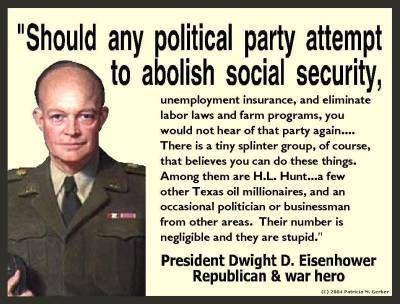
The first Republican successes in the South came in the elections of 1952 and 1956, when Dwight Eisenhower won five and eight states, respectively*. These victories, however, were only marginally related to racial politics; Eisenhower’s stature as Supreme Commander of Allied Forces in World War II had a much larger role, as did his party’s virulent anti-communism. Nixon held only five of these states in 1960.
The real turning point came in 1964. After passage of the Civil Rights Act, Barry Goldwater’s conservative campaign, with its emphasis on limited government and states’ rights, carried five Southern states, four of which had not been won by a Republican in the 20th century. No Democratic presidential candidate has won a majority of Southern states since, with the single exception of former Georgia Gov. Jimmy Carter’s 1976 campaign. The South is now the most reliably Republican region of the country, and supplies the party with most of its Electoral College support.
The South’s realignment explains a lot about our politics. But it doesn’t, in itself, explain one very important fact: why the post-civil rights Republican Party went on to become the monolithically conservative party we have today. We can put this point as a question: Why didn’t the Republican Party end up looking more like the pre-realignment Democrats, with a coalition of Northern moderates and liberals yoked to conservative Southerners? (And the Midwest along for the ride.) In effect, we’re asking how realignment is related to “polarization” — the ideological sorting out that has led to our present party system, in which nearly all moderates and liberals identify as Democrats and nearly all conservatives as Republicans.
It’s important to ask this question for at least two reasons. First, because it highlights the fact that realignment and polarization are analytically distinct concepts — a point often passed over in discussions of this subject. The sudden migration of Southern whites into Republican ranks is obviously connected with polarization; what we need to know is exactly how and why. Which brings us to the second reason. Because the answer we’re led to is so refreshingly old-fashioned and therefore, in today’s intellectual culture, completely counterintuitive: They are connected through the agency of political actors.
In “Rule and Ruin,” his wonderful history of the collapse of Republican moderation, the historian Geoffrey Kabaservice documents the process by which conservative activists remade the Republican Party in their image. (If I could recommend only one book this year to students of American history, it would be this one.) Filling a broad canvas with an enormous wealth of detail, Kabaservice shows us that conservatives always thought of themselves as engaged on two fronts: Moderate Republicans were as much the enemy as liberal Democrats. William Rusher, Bill Buckley’s colleague at National Review, remarked revealingly that the modern conservative movement formed itself “in opposition to the Eisenhower administration.”
One can’t help but admire the tenacity, focus and creativity that conservative activists brought to their task. They transformed the Republican Party at every level: from the grass roots, where they assumed control of local bodies such as city councils, caucuses and county commissions, to the state and national party machinery. They also built a network of institutions designed to cultivate and publicize conservative ideas. These ranged from relatively sophisticated periodicals and think tanks (National Review, the early Heritage Foundation) to rawer, more demotic facsimiles (the American Spectator, the Cato Institute). Groups such as the Moral Majority arose, especially on the religious right, and new media technologies allowed for the consolidation of conservative voices on talk radio and cable television.
These actions were all part of the same relentless design: to purge the Republican Party of moderate voices and to install conservatives in every position of meaningful power and influence. But they had another side as well. Because as a party shapes itself it also shapes its electorate. And a party engaged in a process of purification, if it wants to continue to win elections, needs a similarly purified electorate.
The realignment of Southern whites must be understood in this context. When they deserted the Democratic Party in the mid-’60s, they presented Republicans with a huge electoral windfall. Republicans then had to decide how to invest this unexpected capital. In doing so they had to balance at least two things: numbers and intensity. Numbers are important, of course — you can’t win elections without them — but it’s an old adage in politics that an intense 51 percent is better than a relaxed 55 percent. The Republican decision to embrace an increasingly radical version of conservatism should be seen, in effect, as an attempt to leverage the intensity and loyalty of their new Southern voters. These qualities were expected to offset the loss of any moderate or liberal supporters who might abandon the party as it lurched to the right.
It was a perfectly rational strategy, and it worked brilliantly. Between 1968 and 1992 — 24 years, an entire generation — Democrats won exactly one presidential election, the post-Watergate campaign of 1976. But after ’92 the strategy began to break down on the national level, due mainly to demographic factors: There simply weren’t enough rural white voters anymore to win presidential elections in a consistent way. But by then the right was fully in control of Republican politics and uninterested in sharing power (or policy) with their moderate brethren. They developed a narrative to counter any suggestion that ideological rigidity was the cause of the party’s losses in national (and, increasingly, statewide) races: the quixotic claim that it had nominated “moderates” unable to bring out the conservative majorities who lurk, abandoned and bereft, in the heartland.
In the meantime the ritual purges have continued — the immediate denunciations, thundered from various media pulpits, whenever a Republican politician utters an unorthodox opinion; the threat (or reality) of primary challenges to silence dissent; the invocation of paranoid fantasies that inflame “the base” and make them ever more agitated and vindictive.
Now, in 2013, we have the politics that 50 years of this process have created. The Democratic Party has fewer conservatives than it once did, but is still a broadly coalitional party with liberal and moderate elements. It controls the coasts, has strength in the industrial Midwest, and is making inroads in the upper, more urbanized South and in Florida. It confronts a Republican Party almost wholly dependent on the interior states of the old Confederacy. (The party continues to win in the mountain and prairie West, but the region is too sparsely populated to provide any real electoral heft.) Because of its demographic weakness, it is more beholden than ever to the intensity of its most extreme voters. This has engendered a death spiral in which it must take increasingly radical positions to drive these voters to the polls, positions that in turn alienate ever larger segments of the population, making these core voters even more crucial — and so on. We have a name these days for the electoral residue produced by this series of increasingly rigorous purifications. We call it “the Tea Party.”
The cry of the hour is that our politics is “dysfunctional” — mired in “gridlock,” all bipartisanship lost. This is of course true, but it must be seen as merely the latest result of the conservative politics of purity. After all, when does a politician, in the normal course of affairs, have a reason to do something? When he thinks it will gain him a vote, or that not doing it will cost him a vote. It follows that politicians have a reason to be bipartisan — to work with the opposition — only when doing so will increase, not decrease, their electoral support. And this can only happen if they potentially share voters with their opposition. But the Republican electorate is now almost as purified as the Republican Party. Not only is it unlikely to support Democratic candidates, it’s virtually certain to punish any Republican politician who works with Democrats. The electoral logic of bipartisanship has collapsed for most Republicans; they have very little to gain, and much to lose, if they practice it. And so they don’t.
Unfortunately, our government isn’t designed to function in these conditions. The peculiarities of our system — a Senate, armed with the filibuster, that gives Wyoming’s 576,000 people as much power as California’s 38,000,000; gerrymandered districts in the House; separate selection of the executive and the legislature; a chronically underfunded elections process, generally in partisan hands and in desperate need of rationalization — simply won’t permit it. What we get instead is paralysis — or worse. The Republican Party, particularly in the House, has turned into the legislative equivalent of North Korea — a political outlier so extreme it has lost the ability to achieve its objectives through normal political means. Its only recourse is to threats (increasingly believable) that it will blow up the system rather than countenance this-or-that lapse from conservative dogma. This was the strategy it pursued in the debt ceiling debacle of 2011, and if firebrands such as Ted Cruz and Mike Lee have their way it will guide the party’s approach to the same issue this fall, and perhaps to government funding (including “Obamacare”) as well. Realignment and polarization have led us to gridlock and instability.
The relentless radicalization of the Republican Party since 1964 is the most important single event in the political history of the United States since the New Deal. It has significantly shaped the course of our government and will continue to do so for the foreseeable future. But this means it has also shaped the individual life of every citizen— the complex amalgam of possibilities and opportunities available (or not) to each of us. The conservative visionaries of the ‘50s and ‘60s wanted a new world. We’re all living in it now.
* The 1928 election is something of an exception to this statement; eight Southern states, offended by Democratic candidate Al Smith’s Catholicism, voted instead for Herbert Hoover. But it seems safe to regard this election as an outlier; FDR won every Southern state in the next four presidential elections.
----------------------------------------------------------------------------end
Depressing, innit? They are willing to destroy the country to get their way. Who are the "patriots" now?
L
-
-
-
RL....great explanation and a VERY good graphic underneath. The end of the story is going to be something of a cliff-hanger.
Jackie
-
-
-
. “In the United States I have always believed that there was a big difference between Conservative and stupid. Boy is it getting harder to prove that one by the minute.”
~Rick Mercer
Well, well,well. Someone who thinks like I do.Jackie
-
One can be angry, fearful and willfully ignorant and not necessarily stupid. I think a lot of conservatives are the former.
-
I think I consider ignorant and willfully stupid two different things. Ignorant is just not knowing - like how citizenship works. Yes, Crazy Cruz is indeed a Canadian citizen, whether he took advantage of anything connected with his citizenship or not. It is a legal fact that some people are not aware of. Saying that he isn't a Canadian citizen because "he never claimed it" is ignorance of the law.
OTOH, Willfully stupid is knowing the facts full well and denying them - like evolution. Scientific fact in general. The President's birthplace, citizenship or religion. Or reading citizenship law and looking up Canadian nationality - and still denying that Crazy Cruz is a Canadian citizen (unless he has undergone the legal process of renunciation). Those things classify as willfully stupid, IMO.
Anger and fear can stem from ignorance, but they often produce willful stupidity.
At least that's my take. YMMV. -
RL -- Interesting essay by Kim Messick. But she glossed over an important factor that seems to be holding many of these "purified" conservative/TPers together, and that is the Dominionist movement. For anyone who is unfamiliar with this, please google Dominionist Movement in the U.S. and be prepared to tear out your hair
 . Several years ago, these folks started to infiltrate the northern border, especially in Alberta and B.C. They're dangerous to both our democracies.
As for Crazy Cruz, although he is reputed to be very smart (great school grades thanks to a photographic memory) he doesn't seem to know how government works, and every day I'm reading about another senseless thing he has said. And for him NOT to know about his Cdn citizenship tells me he is probably ignorant about many other things as well. And it will take him up to a year to divest himself of Canada....the sooner the better, I say!
-
Can someone tell me why, after 100,000 people have already been killed in this country, that it suddenly becomes important to other countries. There should have been intervention a long time ago.
There have actually been reports that the rebels were responsible for the chemical weapons.
-
It seems nowadays that every country sits on its hands and waits for the US to do something. I'd like to see other countries get outraged enough to say they are ready to join forces. But you hear the crickets chirping.
That said I have no ideas how to approach this tragedy or hold that miserable bastard accountable. -
Please someone explain how chemical weapons are inherently more evil than bombs? Non-combatant men, women and children are killed no matter which is used. Are the deaths of civilians by chemical weapons more appalling than the deaths by incendiary bombs which caused fire storms of Dresden during WWII? http://www.youtube.com/watch?v=xgXNmZ2RQ14
Whoever fights monsters should see to it that in the process he does not become a monster. ---Nietzsche
We should not take any military action in Syria unless supported by the Arab League. The Arab League is unlikely to authorize such strikes so we should stop interfering in a situation where we have no idea who has "clean hands".
-
I saw a TV piece yesterday, showing people in the city in Syria which is protected from the rebels - people sitting around a swimming pool on their casual Friday - living the high life. Quite a contrast to the suffering going on outside. Their immediate neighbours should have intervened a long time ago.
Only 1 week until we get rid of our crappy govmint

-


 http://www.youtube.com/watch?v=u4N6to_VKNE




Categories
- All Categories
- 679 Advocacy and Fund-Raising
- 289 Advocacy
- 68 I've Donated to Breastcancer.org in honor of....
- Test
- 322 Walks, Runs and Fundraising Events for Breastcancer.org
- 5.6K Community Connections
- 282 Middle Age 40-60(ish) Years Old With Breast Cancer
- 53 Australians and New Zealanders Affected by Breast Cancer
- 208 Black Women or Men With Breast Cancer
- 684 Canadians Affected by Breast Cancer
- 1.5K Caring for Someone with Breast cancer
- 455 Caring for Someone with Stage IV or Mets
- 260 High Risk of Recurrence or Second Breast Cancer
- 22 International, Non-English Speakers With Breast Cancer
- 16 Latinas/Hispanics With Breast Cancer
- 189 LGBTQA+ With Breast Cancer
- 152 May Their Memory Live On
- 85 Member Matchup & Virtual Support Meetups
- 375 Members by Location
- 291 Older Than 60 Years Old With Breast Cancer
- 177 Singles With Breast Cancer
- 869 Young With Breast Cancer
- 50.4K Connecting With Others Who Have a Similar Diagnosis
- 204 Breast Cancer with Another Diagnosis or Comorbidity
- 4K DCIS (Ductal Carcinoma In Situ)
- 79 DCIS plus HER2-positive Microinvasion
- 529 Genetic Testing
- 2.2K HER2+ (Positive) Breast Cancer
- 1.5K IBC (Inflammatory Breast Cancer)
- 3.4K IDC (Invasive Ductal Carcinoma)
- 1.5K ILC (Invasive Lobular Carcinoma)
- 999 Just Diagnosed With a Recurrence or Metastasis
- 652 LCIS (Lobular Carcinoma In Situ)
- 193 Less Common Types of Breast Cancer
- 252 Male Breast Cancer
- 86 Mixed Type Breast Cancer
- 3.1K Not Diagnosed With a Recurrence or Metastases but Concerned
- 189 Palliative Therapy/Hospice Care
- 488 Second or Third Breast Cancer
- 1.2K Stage I Breast Cancer
- 313 Stage II Breast Cancer
- 3.8K Stage III Breast Cancer
- 2.5K Triple-Negative Breast Cancer
- 13.1K Day-to-Day Matters
- 132 All things COVID-19 or coronavirus
- 87 BCO Free-Cycle: Give or Trade Items Related to Breast Cancer
- 5.9K Clinical Trials, Research News, Podcasts, and Study Results
- 86 Coping with Holidays, Special Days and Anniversaries
- 828 Employment, Insurance, and Other Financial Issues
- 101 Family and Family Planning Matters
- Family Issues for Those Who Have Breast Cancer
- 26 Furry friends
- 1.8K Humor and Games
- 1.6K Mental Health: Because Cancer Doesn't Just Affect Your Breasts
- 706 Recipe Swap for Healthy Living
- 704 Recommend Your Resources
- 171 Sex & Relationship Matters
- 9 The Political Corner
- 874 Working on Your Fitness
- 4.5K Moving On & Finding Inspiration After Breast Cancer
- 394 Bonded by Breast Cancer
- 3.1K Life After Breast Cancer
- 806 Prayers and Spiritual Support
- 285 Who or What Inspires You?
- 28.7K Not Diagnosed But Concerned
- 1K Benign Breast Conditions
- 2.3K High Risk for Breast Cancer
- 18K Not Diagnosed But Worried
- 7.4K Waiting for Test Results
- 603 Site News and Announcements
- 560 Comments, Suggestions, Feature Requests
- 39 Mod Announcements, Breastcancer.org News, Blog Entries, Podcasts
- 4 Survey, Interview and Participant Requests: Need your Help!
- 61.9K Tests, Treatments & Side Effects
- 586 Alternative Medicine
- 255 Bone Health and Bone Loss
- 11.4K Breast Reconstruction
- 7.9K Chemotherapy - Before, During, and After
- 2.7K Complementary and Holistic Medicine and Treatment
- 775 Diagnosed and Waiting for Test Results
- 7.8K Hormonal Therapy - Before, During, and After
- 50 Immunotherapy - Before, During, and After
- 7.4K Just Diagnosed
- 1.4K Living Without Reconstruction After a Mastectomy
- 5.2K Lymphedema
- 3.6K Managing Side Effects of Breast Cancer and Its Treatment
- 591 Pain
- 3.9K Radiation Therapy - Before, During, and After
- 8.4K Surgery - Before, During, and After
- 109 Welcome to Breastcancer.org
- 98 Acknowledging and honoring our Community
- 11 Info & Resources for New Patients & Members From the Team